


Why Dew Point and O₂ ppm Are the Purity Metrics Industrial Hydrogen Buyers Should Be Asking About
Most conversations about industrial hydrogen center on two numbers: how much, and how fast. Capacity in kilograms per day. Uptime percentage. Cost per kilogram delivered. These are the metrics that dominate procurement conversations, RFPs, and vendor comparisons.
There are two other numbers that rarely make it into that conversation, despite determining whether the hydrogen a facility receives is actually usable for its process: dew point and oxygen (O₂) concentration in parts per million (ppm).
For industrial operators in process-sensitive sectors lab-grown diamond manufacturing, specialty chemicals, pharmaceutical synthesis, semiconductor fabrication these two metrics are not a footnote. They are the difference between hydrogen that meets spec and hydrogen that quietly compromises the process it's meant to support.
What Dew Point and O₂ ppm Actually Measure
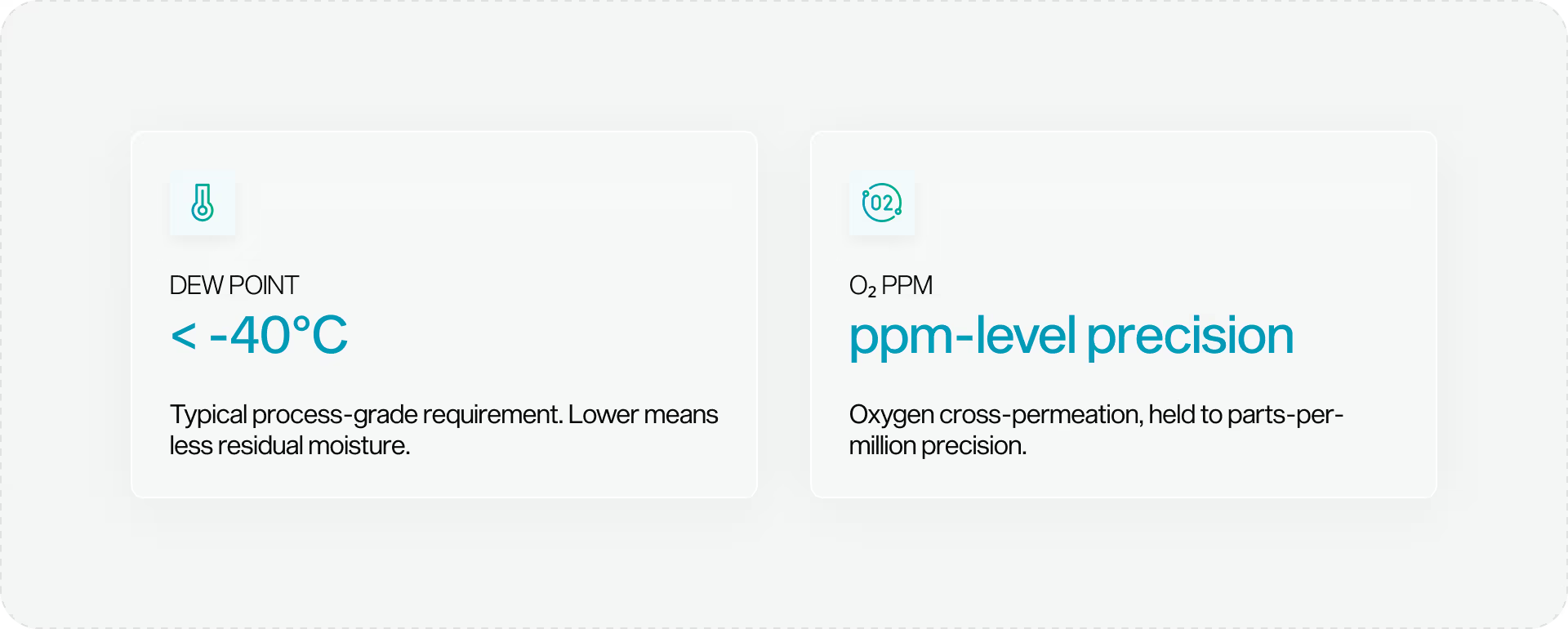
Dew point is the temperature at which moisture in a gas stream begins to condense. In hydrogen systems, it's a proxy for residual water vapor left after the gas has been dried and purified. A lower (more negative) dew point means less residual moisture. Fuel-cell-grade and process-grade hydrogen typically require very low dew points, often well below –40°C, because even trace moisture can interfere with downstream equipment and sensitive reactions.
O₂ ppm measures oxygen contamination in the hydrogen stream, typically down to parts-per-million precision. In electrolysis, hydrogen and oxygen are produced simultaneously and separated by a membrane. Some degree of cross-permeation trace oxygen migrating into the hydrogen stream is inherent to the process. How tightly that cross-permeation is controlled is a direct function of system design, membrane quality, and purification architecture.
Together, these two numbers are the clearest available proxy for gas quality at the point of use. Neither shows up on a typical capacity spec sheet, and neither correlates directly with production volume or system uptime a system can be large, fast, and reliable while still producing hydrogen that fails a process-critical purity threshold.
International standards reflect how seriously purity is treated in fuel-cell and high-purity applications. ISO 14687, the internationally recognized hydrogen fuel quality specification, sets a minimum hydrogen mole fraction alongside individual, species-specific limits for contaminants including moisture, oxygen, nitrogen, carbon monoxide, and total hydrocarbons. The standard exists precisely because bulk purity percentage alone is an unreliable measure a hydrogen stream can register as "high purity" by overall percentage and still fail a fuel cell or a sensitive industrial process because one specific contaminant, like moisture or oxygen, exceeds its individual threshold.
Why It Matters: Three Concrete Stakes
Safety margin:
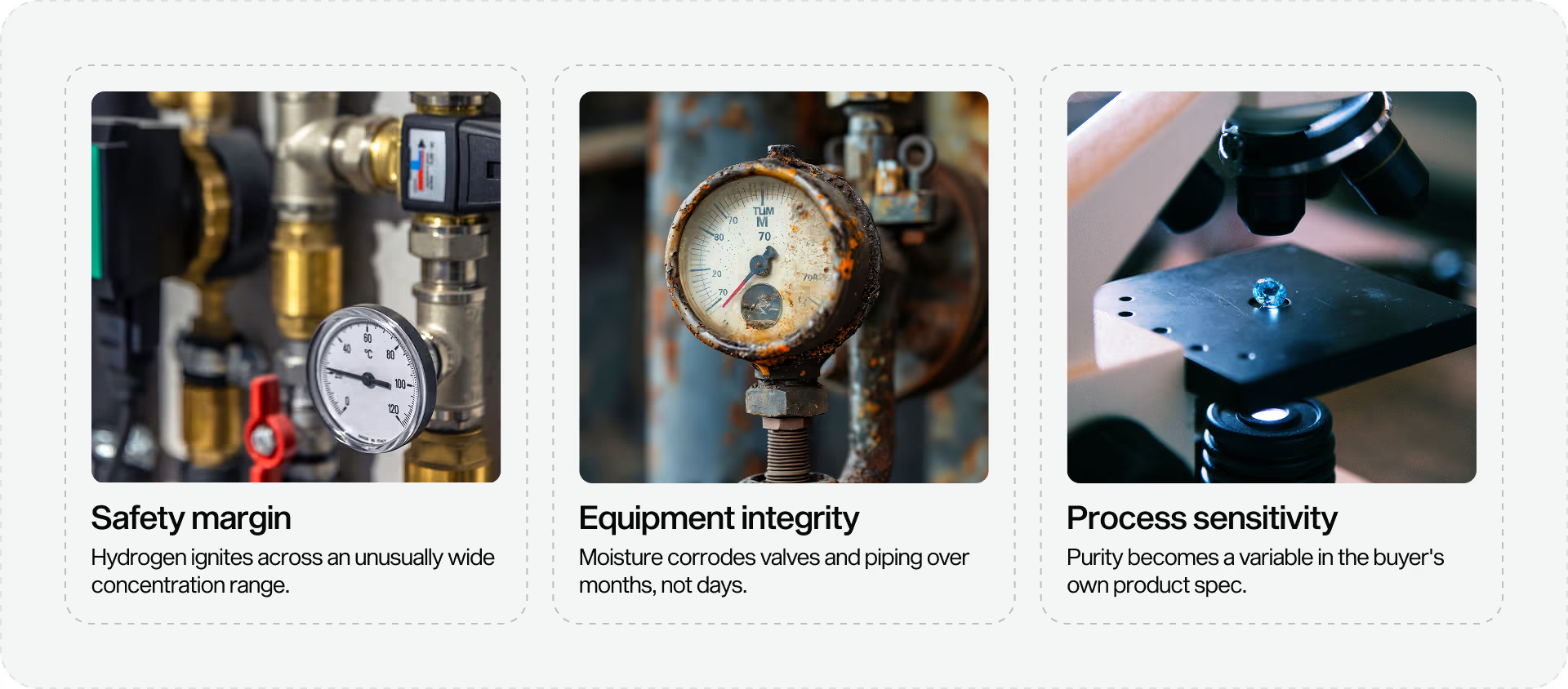
Hydrogen and oxygen form a flammable mixture across an unusually wide concentration range roughly 4% to 75% hydrogen by volume in air, and an even broader range in pure oxygen environments. That wide flammability window, combined with hydrogen's very low minimum ignition energy, is why O₂ contamination in a hydrogen stream is treated as a hard engineering constraint rather than a quality nice-to-have. Tight, continuously monitored O₂ ppm control is what keeps a system operating with margin against that threshold, not just on paper but in continuous industrial service.
Equipment integrity:
Moisture in a hydrogen stream doesn't announce itself immediately. Over time, it drives corrosion in valves, regulators, and piping, and can freeze out in cryogenic or high-pressure sections of a system. A dew point that looks acceptable on day one of operation can become a reliability and maintenance liability by month six. For operators running continuous, on-demand hydrogen supply not batch deliveries dew point control compounds in importance the longer a system runs.
Process sensitivity:
This is where purity stops being a safety and maintenance conversation and becomes a product-quality one. Lab-grown diamond (CVD) synthesis is highly sensitive to moisture and trace contamination in the process gas; even small deviations can affect crystal growth and yield. Pharmaceutical synthesis and specialty chemical processes carry their own strict impurity tolerances tied to product quality and regulatory compliance. Semiconductor fabrication is less forgiving still. In each of these industries, the hydrogen supply isn't just an input it's a variable in the buyer's own product specification.
The Supply Chain Purity Problem
The industry's dominant cost narrative has focused on delivered cost the reality that 70–85% of hydrogen's landed cost is typically midstream: compression, transport, and storage, not production. Purity has a parallel story that gets less attention.
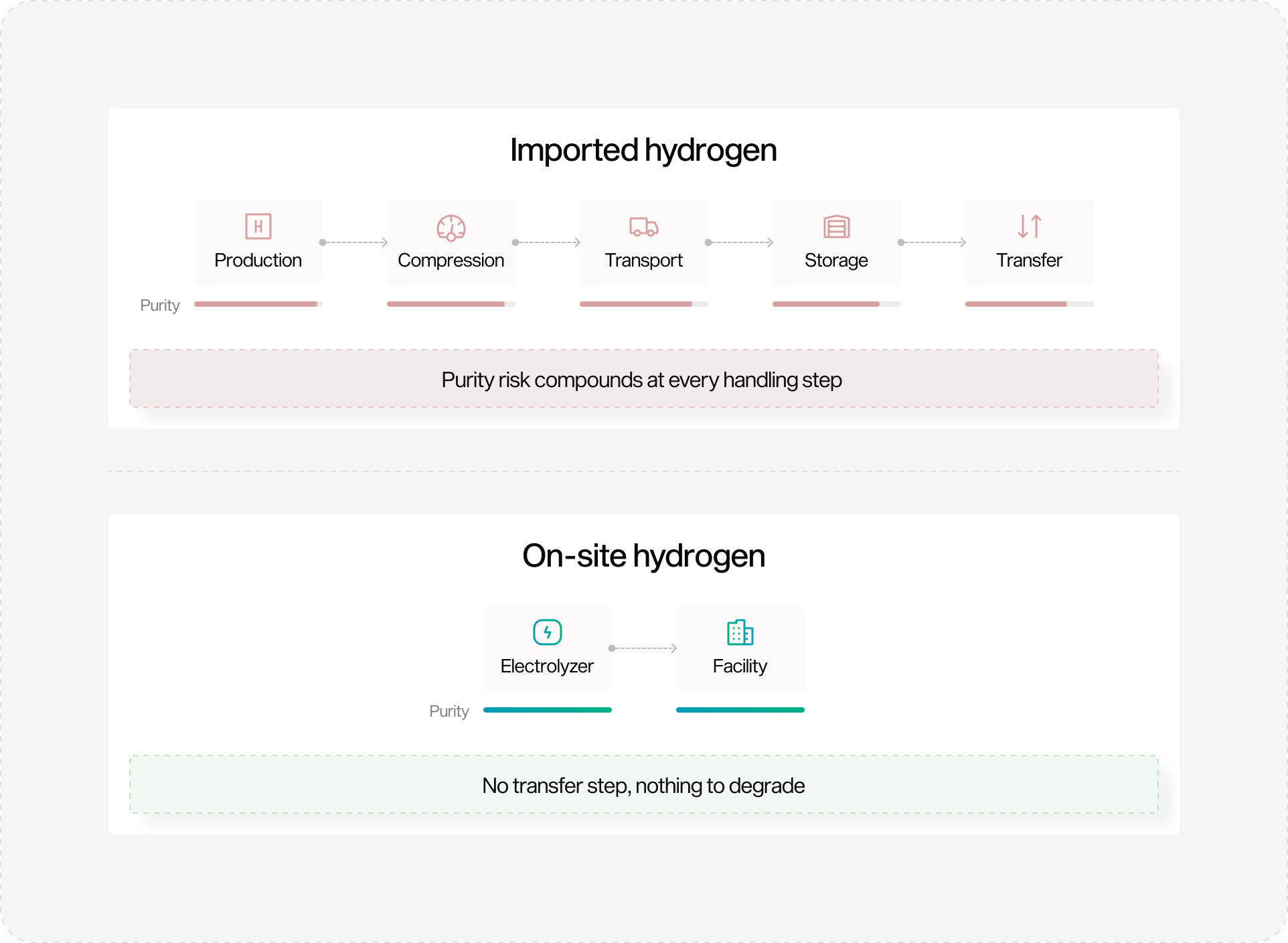
Every step in a centralized hydrogen supply chain production, compression, transport, storage, transfer at the point of use is a fresh opportunity for purity to degrade. Moisture can be introduced during transfer. Contamination risk compounds with every additional handling step. And critically, a buyer receiving trucked-in or pipeline-delivered hydrogen has limited practical ability to verify that what arrives on-site still matches what was certified at the point of production.
This is a purity gap, and it sits alongside the cost gap that centralized supply chains already carry
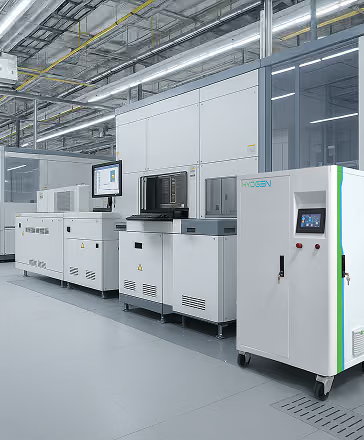
On-site, on-demand generation collapses that gap by design. When the electrolyzer and the point of use are the same location, there is no transport or storage interval in which purity can degrade unnoticed. The dew point and O₂ ppm the system produces are the dew point and O₂ ppm the process receives measurable in real time, not inferred from a certificate of analysis that may no longer reflect the gas actually being consumed.
The Buying Question That's Missing
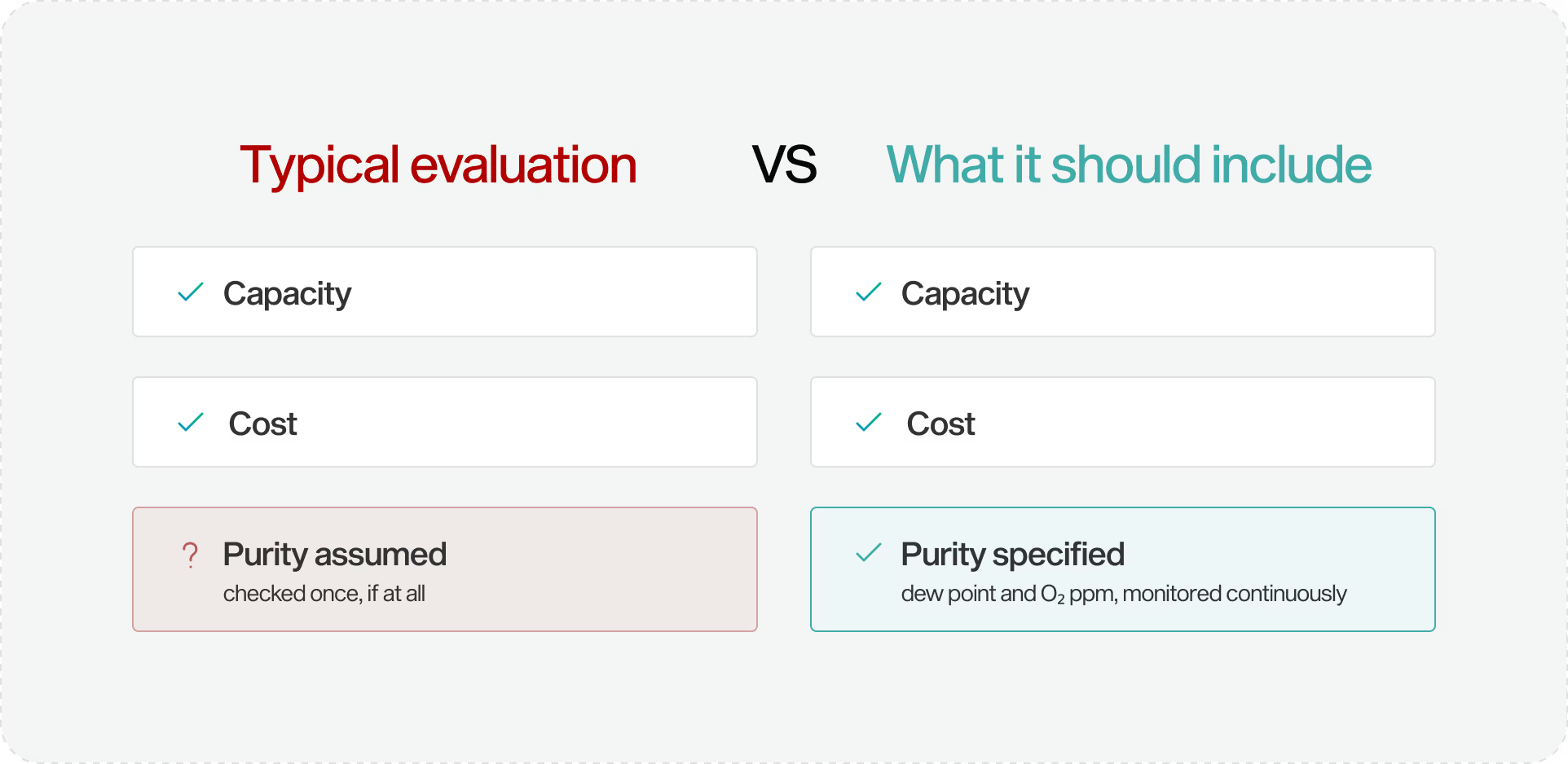
Procurement conversations for industrial hydrogen systems tend to open with capacity and cost. Purity is usually addressed later, if at all often assumed rather than specified.
For operators in process-sensitive industries, that ordering should change. Dew point and O₂ ppm data not just at commissioning, but under continuous, real-world operating conditions should be a standard part of any hydrogen supplier evaluation, alongside capacity and delivered cost.
Suppliers who can provide that data with confidence, on an ongoing basis, are demonstrating something capacity figures alone can't show: that the system is built to protect the buyer's process, not just to move volume.





Frequently Asked Questions


